
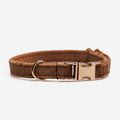
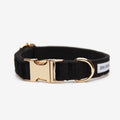
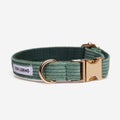
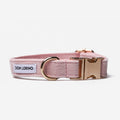
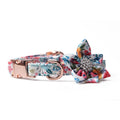


Dog collars that are gentle on the coat
The right collar can reduce unnecessary friction, tangles and marks in your dog’s coat. This guide helps you choose a gentle shape, a soft material and the right size for your dog.

Which collar is gentlest on the coat?
For dogs whose coats are easily worn, flattened or tangled, a round-stitched dog collar can be a good option. Its rounded profile has a smaller contact area against the coat than a wide, flat collar.
However, a round-stitched collar cannot guarantee that all coat wear will be prevented. The material’s surface, the fit, your dog’s coat type and how long the collar is worn also affect the result.
Why can collars wear the coat?
Changes to the coat around the neck can occur when the same area is repeatedly exposed to pressure and movement. Several factors often interact.
As the collar moves back and forth, its edges or surface may rub against the coat.
A collar that is too loose may move excessively. One that is too tight may create constant pressure.
Sand, dirt and moisture between the collar and coat can increase friction.
A collar worn for most of the day affects the coat more than one used only during walks.
Round-stitched collars for sensitive or long coats
A round-stitched dog collar has a softly rounded profile instead of a flat strap. This construction contacts the coat differently and is often appreciated for dogs with long, dense or sensitive coats.
The collar has none of the wide edges found on a traditional flat style.
A supple outer layer can feel comfortable against the dog’s neck and coat.
The slim profile is less visible in the coat and creates a discreet, elegant look.

Three things to compare before buying
A gentle dog collar must suit both your dog’s build and coat. Consider shape, material and size together.
Rounded or flat profile
A round-stitched style has a smaller contact area against the coat. A flat style distributes pressure over a wider area.
View round-stitched style
Soft, smooth surface
Make sure the material is supple and that the edges, stitching and hardware do not rub against the coat.
Read about leather care
Secure without pressure
The collar should neither slide around excessively nor sit so tightly that it creates constant pressure against the neck and coat.
View the size guideMeasure your dog before choosing a collar
Dogs of the same breed may have different neck measurements, head shapes and amounts of coat. Always measure the individual dog and compare the result with the chosen style’s measurements.
How to measure your dog’s neckPlace a soft measuring tape around your dog’s neck. It should sit close without being pulled tight.
Measure in the same way the collar will be worn. Do not unnecessarily compress a dense or long coat.
Sizes and measuring methods may differ between fixed collars, half-check collars and other constructions.
Coat volume, grooming, weight and growth can change how the collar fits over time.
Redness, itching, sores or noticeable hair loss may have causes other than the collar’s shape. Remove the collar and contact a vet if your dog is uncomfortable or the change does not resolve.
Reduce everyday coat wear
Even a well-chosen collar must be used and cared for correctly. A clean coat, proper fit and regular checks help reduce unnecessary friction.
Give the coat a break when the collar is not needed. Always remove it when your dog is unattended or where it could become caught.
Dirt and sand can create a rough surface against the coat. Clean the collar according to its care instructions and allow it to dry naturally.
Regularly look and feel around your dog’s neck. If you spot wear early, you can adjust the fit or try a different style.
No collar suits every coat type
Even a soft, round-stitched dog collar can affect the coat if the size is wrong or it is worn for long periods. Every dog’s coat responds differently.
- Make sure the collar has no rough edges or damaged stitching.
- Change style if the collar repeatedly causes tangles or marks.
- Do not use the collar if the hardware or other load-bearing parts are damaged.
- Seek veterinary advice for itching, skin irritation, sores or unexpected hair loss.
About collars and your dog’s coat
Which dog collar causes the least coat wear?
A soft, correctly fitted collar reduces the risk of unnecessary friction. Round-stitched collars are often appreciated for long or sensitive coats because they have a smaller contact area, although results vary between dogs.
Are round-stitched collars better for long-haired dogs?
The rounded profile can reduce the contact area and has no wide edges resting against the coat. Round-stitched collars can therefore be a good option for long-haired dogs.
Can a collar cause hair loss?
Friction and pressure can affect the coat, but hair loss may also be caused by skin problems, allergies, parasites or other medical conditions. Contact a vet if hair loss is noticeable or persists.
Should a dog wear a collar at home?
Removing the collar when it is not needed gives the coat a break. A dog should not wear a collar unattended or in situations where it could become caught.
Can a loose collar wear the coat?
Yes. A collar that slides and rotates excessively can create more friction. It must not be too tight either. The right balance depends on the style, your dog’s measurements and coat type.
Does the collar material affect the coat?
The material’s softness, surface, edges and condition affect its contact with the coat. A dirty, damaged or very rough collar can create more friction than one that is clean and supple.
How often should I check the fit?
Check the fit regularly and whenever there are noticeable changes in weight, coat volume, grooming or growth.
Are half-check collars suitable for dogs with long coats?
Round-stitched half-check collars can be an option for long-haired dogs. The construction and stop position must be correctly fitted to the dog’s neck and head.
Find a more coat-friendly dog collar
Home with your dog’s measurements and coat type. Then compare round-stitched and classic styles and choose a collar that sits softly and securely around the neck.