
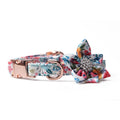


Dog collar fit guide
How should a dog collar fit?
A dog collar should sit securely without pressing against the neck. This guide explains how to measure your dog, check the fit and recognise whether the collar is too tight or too loose.

The short answer
Secure, but never tight
The collar should be secure enough not to slip over your dog’s head, but it must not press, rub or affect breathing and movement.
As an initial check, you should normally be able to slide one or two fingers between the collar and your dog’s neck. This is a practical guide, not a universal rule. Your dog’s size, coat and neck shape, as well as the collar’s construction, all affect the fit.
Always check two things: Your dog must be able to move its head naturally and must not be able to back out of the collar or pull it over its head.
Three quick checks
How to tell whether the collar fits correctly
Check the fit both while your dog is standing still and while it is moving.
Check all the way around the neck
The collar should sit evenly, without any edge, ring or part of the buckle pressing against the skin.
Test it in motion
Let your dog walk, lower its head and turn. The collar should remain stable without restricting movement.
Check it against the head
Make sure the collar cannot be pulled over your dog’s head when pressure is applied forwards or backwards.
Assess the fit
Is the collar too tight or too loose?
Small adjustments can make a significant difference. Recheck the collar if your dog seems uncomfortable or if it changes position during a walk.
Signs that the collar is too tight
Loosen the collar and check the fit if you notice any of the following:
- The collar leaves clear marks on the skin or coat
- Your dog scratches or tries to remove the collar
- Your dog struggles to move its head and neck naturally
- The buckle or edges press against the neck
- It is difficult to slide one finger beneath the collar
Signs that the collar is too loose
Tighten the collar or choose another size if it does not sit securely:
- The collar slides considerably up and down the neck
- Your dog can get its lower jaw beneath the collar
- The collar can be pulled over your dog’s head
- The buckle and D-ring rotate all the way around the neck
- The collar catches easily on objects or branches
Measure before ordering
How to measure your dog’s neck
Use your dog’s current neck measurement and the size chart for the specific style.
View the full size guideUse a soft measuring tape
Let your dog stand naturally. Do not use a rigid tape measure or rely solely on an old collar.
Measure where the collar will sit
Wrap the tape around the neck where the collar will normally rest. Keep it close to the coat without pulling it tight.
Read the size chart for the style
Size labels and fit may differ between Click, Petit and the various Maul styles.
Check after adjustment
Try the collar indoors and check that it sits securely in several different positions.
Different proportions
The same measurement does not always mean the same style
Your dog’s body shape and size, along with the collar’s construction, determine which style provides the best fit.

Click
An adjustable dog collar for dogs suited to Don Lorino’s standard proportions.
View Click
Petit
Smaller proportions and more delicate details for Chihuahuas and other small dogs.
View Petit
Sighthound
Wide, shaped leather collars designed for the distinctive proportions of sighthounds.
View sighthound collarsA changing fit
Check a puppy’s collar frequently
Puppies grow quickly, and a collar that fitted well a few weeks ago may suddenly become too tight. Check the fit regularly.
Adjust the collar when needed and change size when there is no adjustment room left. Do not choose a collar so large that the puppy can escape from it while growing into it.
Frequently asked questions
Dog collar fit and sizing
How tight should a dog collar be?
The collar should sit securely without pressing. As an initial check, you should normally be able to slide one or two fingers between the collar and neck, although your dog’s size and coat and the collar’s construction affect the fit.
How do I know if the dog collar is too tight?
The collar may be too tight if it leaves clear marks, restricts movement, rubs or makes it difficult to slide one finger between the collar and neck.
How do I know if the collar is too loose?
The collar is too loose if your dog can get its lower jaw beneath it, if it slides considerably along the neck or if it can be pulled over the head.
How do you measure a dog’s neck for a collar?
Measure with a soft tape where the collar will sit. Hold it close to the coat without pulling it tight and compare the result with the size chart for the relevant style.
What size collar should a puppy wear?
Base the size on the puppy’s current neck measurement. Choose an adjustable collar that fits securely now and check the fit often as the puppy grows.
Can I use the size of my dog’s old collar?
Use it only as a reference. Different styles are measured and fit differently, so check your dog’s current neck measurement and the new product’s size chart.